
Prayer
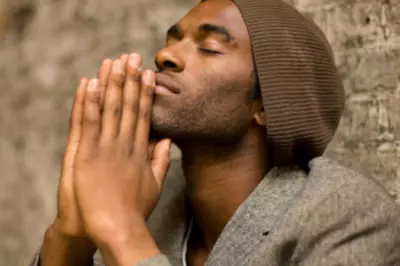
What is prayer?
 Prayer has a very personal meaning arising from an individual's religious background or spiritual practice. For some, prayer will mean specific sacred words; for others, it may be a more informal talking or listening to God or a higher power.
The word "prayer" comes from the Latin precarius, which means "obtained by begging, to entreat." Prayer is rooted in the belief that there is a power greater than oneself that can influence one's life. It is the act of raising hearts and minds to God or a higher power.
There is no one set way to pray. Forms include spoken prayers, silent prayers, and prayers of the mind, the heart, and union with God. Prayers may be directed (e.g., prayers for specific things) or non-directed, with no specific outcome in mind.
Types of prayers
Prayer comes in many flavors! Specific types of prayers include:
- Intercessory prayer - praying for someone else
- Distant healing prayer - praying for the healing of someone or something at a distance
- Petition prayer - asking God or a higher power for something
- Centering prayer - centering on a word or phrase for a minimum of 20 minutes in silence, usually in order to open to the sacred
- Contemplative prayer - opening to union with God or the sacred
- Meditation - differs somewhat by religion. In Christianity, the goal of meditation is often union with God. In Buddhism, the goal is to expand awareness and gain insight into the nature of passing phenomenon. Meditation may be practiced by sitting in silence (often while following one's breath), doing intentional movement, or using visualization, imagination, or a specific object or mantra as a focus.
How might prayer benefit your health and wellbeing?
Prayer is important in a healthcare context simply because it is used so widely. According to Dr. Wayne Jonas, "Surveys indicate that nearly 90% of patients with serious illness will engage in prayer for the alleviation of their suffering or disease." Among all forms of complementary medicine, prayer is the single most widely-practiced healing modality. Research conducted by Dr. Christina Puchalski, Director of the George Washington Institute for Spirituality and Health, prayer is the second most common method of pain management (after oral pain medication), and the most common non-drug method of pain management.
The following explanations have been offered as to how prayer helps improve health:
- The relaxation response - prayer elicits the relaxation response, which lowers blood pressure and other factors heightened by stress.
- Secondary control - prayer releases control to something greater than oneself, which can reduce the stress of needing to be in charge.
- The placebo response - prayer can enhance a person's hopes and expectations, and that in turn can positively impact health.
- Healing presence - prayer can bring a sense of a spiritual or loving presence and alignment with God or an immersion into a universal unconsciousness.
- Positive feelings - prayer can elicit feelings of gratitude, compassion, forgiveness, and hope, all of which are associated with healing and wellness.
- Mind-body-spirit connection - when prayer uplifts or calms, it inhibits the release of cortisol and other hormones, thus reducing the negative impact of stress on the immune system and promoting healing.
Guided forgiveness meditation
Cultivate feelings of forgiveness by listening to this guided meditation.
This guided forgiveness practice has three steps: We begin with those whom we have caused harm, intentionally or unintentionally. Next we turn our attention to those who have similarly caused us harm, intentionally or unintentionally. And, finally, we turn our attention to self-forgiveness, for ways we may have harmed ourselves, intentionally or unintentionally. You can repeat this process with the same or different people as often as you wish.
 Forgiveness Meditation Transcript.pdf (pdf, 28.15 KB)
Is there evidence for benefits of prayer?
There is not a simple answer to the question about the benefits of prayer, in large part because prayer is part of a larger religious or spiritual practice for many people. Hence any observed benefits may come from any aspect of a spiritual practice, including faith itself. It is well documented that hope, belief, and faith positively influence health outcomes (see studies by Barefoot and Kortte in the References section). One specific example, Murphy's 2009 study examining religious beliefs in clinically depressed patients found that "belief in a concerned God can improve response to medical treatment."
In addition, some of the effects of prayer may be due to the larger context within which prayer occurs, which is usually one of religious commitment and social support. The results Harold Koenig cites in his well-known studies may be due to this larger content. He notes: "A large volume of research shows that people who are more R/S [religious or spiritual] have better mental health and adapt more quickly to health problems compared to those who are less R/S. These possible benefits to mental health and wellbeing have physiological consequences that impact physical health, affect the risk of disease, and influence response to treatment."
Prayer and the relaxation response
A off-cited study by Dr. Herbert Benson, a cardiovascular medicine specialist at Harvard Medical School, documented the potential healing benefits of spiritual practices, such as prayer and meditation (as well as hypnosis and other relaxation techniques). In his book Healing Words, Larry Dossey writes that Benson demonstrated that the body responds to these practices with what he calls the relaxation response, which consists of "a lowering of the heart rate, blood pressure, and breathing rate; a reduced need for oxygen; less carbon dioxide production." In effect, the relaxation response is the opposite of the stress response and can be consciously used to modulate the impact of stress.
Evidence for intercessory prayer
The benefits of intercessonary prayer are more controversial. A 2007 review of research on intercessonary prayer concluded that most of the data is equivocal and that "it is not sensible to interpret any of the interesting results with great confidence."
Issues with research on prayer
The following issues exist in studying prayer and healing. Some are true of most medical research and some are unique to prayer.
- Small sample size
- Subject selection
- Control group uncertainty
- No common, agreed-upon methodology
- Quantification of prayer
- How can we tell whether a higher power is intervening?
- How do we measure God?
Where can I find a practitioner?
 In a healthcare setting, there are several sanctioned roles for a spiritual adviser, including chaplain, ordained clergy, rabbi, priest, minister, and spiritual director. A healthcare practitioner, if experienced and skilled in "listening presence" can also function informally as a spiritual advisor, but it is wisest to refer to an expert if there are any spiritual issues or needs.
Chaplains work on site at the hospital and their role is to attend to the spiritual needs of patients in the hospital. They may come from any religious tradition, and therefore may have a wide variety of training and experiences. Most hospitals today require chaplains to have qualified credentials beyond their specific religious education and/or seminary level education. The standard for this training is usually one to two years of certified Clinical Pastoral Education, endorsed and accredited by The Association for Clinical Pastoral Education, Inc.
Learn more about cultivating your sense of spirituality Spiritual directors are trained to help support and nurture patients' faith. They may or may not be associated with a particular denomination, but they typically work with patients of all faiths. Spiritual directors are trained to be "listening presences" who help people deepen their faith lives. A spiritual director may work with a patient alongside a chaplain in a hospital and may continue with that patient after they are released from the hospital.
Patients are also welcome to invite their own priest, minister, rabbi, or cleric to address their own spiritual needs.
The Twelve Peace Prayers - this website includes Baha'I, Buddhist, Christian, Hindu, Jainist, Musliim, Native American, Shinto, sikh, and Zoroastrian prayers for peace.
University of Minnesota Free Online Learning - Prayer
The World Peace Prayer Society is a nonprofit, non-sectarian organization dedicated to spreading the message and prayer "May Peace Prevail on Earth" all over the world.
The World Prayers website gathers the great prayers written by spiritual visionaries into an online database representing all life-affirming traditions. Many of these prayers have been used for hundreds if not thousands of years.
Dossey, L. (1993). Healing Words. San Francisco: Harper Collins Publishers. Glazer, S. (2005). Can Spirituality Influence Health? CQ Researcher, 15(2).
Holt-Lunstad, J., Smith, T.B., Layton, J.B. (2010). Social relationships and mortality risk: A meta-analytic review. PLoS Medicine, 7(7), e1000316.
Jonas, W.B., Crawford, C.C. (2003). Healing Intention and Energy Medicine. New York: Churchill Livingstone.
Koenig, H. (2012). Religion, spirituality, and health: The research and clinical implications. ISRN Psychiatry; vol. 2012, Article ID 278730.
Kortte, K.B., Stevenson, J.E., Hosey, M.M., Castillo, R., Wegener, S.T. (2012). Hope predicts positive functional role outcomes in acute rehabilitation populations. Rehabilitation Psychology; 57(3), 248-55.
McCord, G., Gilchrist, V.J., et al. (2004). Discussing spirituality with patients: A rational and ethical approach. Annals of Family Medicine, 2.
Murphy, P.E., Fitchett, G. (2009). Belief in a concerned god predicts response to treatment for adults with clinical depression. Journal of Clinical Psychology; 65(9), 1000-8.
Palmer, R.F., Katerndahl, D., et al. (2004). A randomized trial of the effects of remote intercessory prayer: Interactions with personal beliefs on problem-specific outcomes and functional status. The Journal of Alternative and Complementary Medicine, 10(3).
Puchalski, C. (2004). Spirituality in Health: the role of spirituality in critical care. Critical Care Clinics, 20.
Roberts L, Ahmed I, Hall S. (2007). Intercessory prayer for the alleviation of ill health. Cochrane Database Syst Rev. 2007 Jan 24;(1):CD000368.
Tippens, K., Marsman, K., Zwickey, H. (2009). Is prayer CAM? Journal of Alternative and Complementary Medicine; 15(4), 435-438.