Reiki
What is Reiki?
Reiki
is a spiritual, vibrational healing practice used to promote balance
throughout the human system. Reiki does not involve physical
manipulation or the ingestion or application of any substances, but
works with the subtle vibrational field thought to surround and
penetrate the body. (Reiki is commonly translated from the Japanese as
universal life energy.)
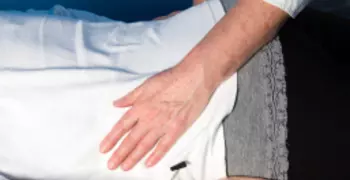
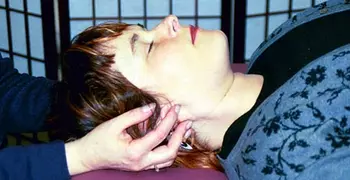
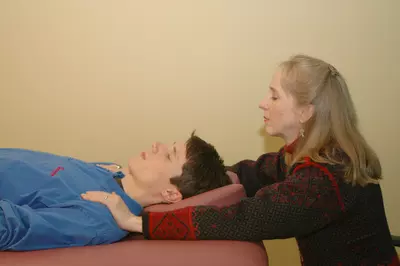
Reiki treatment is usually facilitated
by light, non-manipulative touch to a clothed recipient. You can get
Reiki treatments from a either a professional or a friend who has been
trained, or you can learn to give yourself Reiki-treatment as a daily
wellne
ss practice.
People
receiving Reiki often express a sense of connection to their own innate
spirituality, or inner source of meaning. There is, however, no
religious belief system attached to Reiki.
Reiki was
originally developed as a practice for self-care, and students were
encouraged to give treatment to and receive treatment from others. The
practice can be easily learned by anyone who is interested, regardless
of age (children through seniors) or condition of health.
Some people practice or receive Reiki to strengthen their wellness; others use it to help cope with symptoms, such as pain or fatigue, or to support their medical care, even in the case of chronic illness or at the end-of-life.
How does it relate to other complementary therapies?
The
National Center for Complementary and Alternative Medicine (NCCAM)
categorizes Reiki as "energy medicine." According to NCCAM, therapies
in this category seek to "affect energy fields that purportedly
surround and penetrate the human body" (also known as the biofield).
Energy therapies, such as therapeutic touch and Healing Touch, are
"believed to act by correcting imbalances in the internal biofield."
Some
Reiki practitioners find that Reiki is different from other energy
therapies and is actually closer to meditation. For example, while most
energy therapies use techniques to assess the recipient's biofield and
make specific corrections, Reiki practitioners do not diagnose and do
not deliberately reorganize the biofield. 
Reiki practice is extremely passive. The Reiki practitioner's hands are still for most of the treatment, moving only to change hand placements. The Reiki practitioner is neutral, making no attempt to fix the recipient or to change the biofield. Additionally, the practitioner does not in any way control Reiki energy; she/he merely rests her hands lightly on the body (or just above the body if needed, for example, in the presence of an open wound or burn).
Reiki energy in the
practitioner's hands arises spontaneously in response to the individual
recipient's need for balance at that particular time. In this way, each
Reiki treatment is automatically customized to the immediate need of
that particular recipient, even though the practitioner may use the
same sequence of hand placements for each treatment.
Reiki is
optimally given in a full treatment format but can also be administered
in abbreviated treatments to a specific area or areas of the body. In
urgent situations, even moments of Reiki touch can be soothing.
Where does it come from?
Reiki,
as it is practiced in the U.S. today, dates back to the teachings of
Mikao Usui in Japan in the early 1920's. Usui was a lifelong spiritual
aspirant, a lay monk with a wife and two children. In Usui's time,
various lineages of Buddhist, Taoist, and Shinto practices coexisted as
the dominant themes in Japanese spirituality and culture.
Usui's
intense spiritual practices culminated in a profound revelation that
led to the practice now commonly called Reiki. This realization most
likely occurred in 1922.
Usui traveled widely in Japan during
the last four years of his life, offering his spiritual teachings to
more than 2,000 beginning students, but training only 16 as Reiki
masters. One of his master students, Chujiro Hayashi, was a
retired naval officer. Hayashi worked with Usui to excerpt the healing
practices from Usui's larger body of teachings so that they could be
more widely disseminated.
With
Usui's blessings, Hayashi opened a Reiki clinic in Tokyo where 16
practitioners gave treatment in pairs. Hawayo Takata, a first
generation Japanese-American, came to Hayashi's clinic for relief from
a number of medical conditions, including asthma. Months of treatment
restored Takata's health, and she became a devoted student.
With
Hayashi's active guidance and support, Takata brought Reiki to Hawaii
in 1937 and eventually to the US mainland. Takata practiced and taught
Reiki for 40 years before she began training Reiki masters
(practitioners empowered to teach others). Since Takata's death in
December 1980, her 22 Reiki masters have spread her teachings. Reiki
has become very popular and is now practiced around the world, although
not usually in the traditional form Takata taught.
References/Further Reading
Permission for use of Usui and Takata photos courtesy of Phyllis Lei Furumoto.
Brown, F. (1992). Living Reiki. Mendocino, CA: LifeRhythm.
Eden, D. (1998). Energy Medicine. New York, NY: Tarcher/Penguin.
Krieger, D. (1979). The Therapeutic Touch: How to use your hands to help or heal. New York, NY: Fireside.
Miles, P. (2006). REIKI: A Comprehensive Guide. New York, NY: Tarcher/Penguin.
National Center for Complementary and Alternative Medicine (NCCAM). CAMBasics. Retrieved March 24, 2007 from: http://nccam.nih.gov/health/whatiscam/
National
Center for Complementary and Alternative Medicine (NCCAM). (2006). An
Introduction to Reiki. Retrieved October 6, 2008, from http://nccam.nih.gov/health/reiki/
Ringdahl, D. and Halcon, L. (2006). Reiki. In Synder, M. and Lindquist, R. (Eds.), Complementary and Alternative Therapies in Nursing (6th ed). New York, NY: Springer Publishing.
Starr, B. (2007). Reiki: Learning to Do It. Retrieved March 21, 2007, from http://www.religionandspirituality.com/view/post/11703128193100/Reiki_A_healing_touch
Twan, A. (2005). Early Days of Reiki: Memories of Hawayo Takata. Hope, British Columbia, Canada: Morning Star Productions.