
Holistic Pregnancy & Childbirth

How Can I Best Prepare for Pregnancy and Childbirth?
 Ideally, preparation for a holistic pregnancy and childbirth begins before you become pregnant. Your own good health helps your baby's health. And when you and the baby are healthy, you have more choices in childbirth.
To begin, see your healthcare provider
One of the first things you should do is schedule a preconception counseling appointment with your current healthcare provider to discuss your pregnancy plans. This can help you identify your health strengths, as well as any family history or health problems that might affect pregnancy, such as diabetes, asthma, or high blood pressure. Your healthcare provider will be interested to learn about your work or hobbies to help you identify whether you are at risk for developing certain viruses or infections.
Try to work with your provider to get any chronic health conditions under as much control as possible before you become pregnant. (Note: these issues can also be discussed during your routine "annual" exam.)

You should consider your overall health and wellbeing, including diet, exercise, relationships, to name a few.
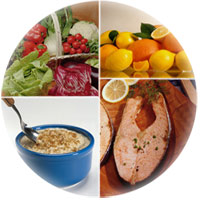 Nutrition is very important while you are trying to become pregnant. A balanced, healthy diet should include sources of protein (such as meat, cheese, dried beans), whole grains, vegetables and fruits, and sources of calcium (such as milk or other dairy products).
In general, fresh whole foods are preferable to highly processed foods, and you might want to consider organic foods when available, especially when choosing fresh fruits and vegetables. Commercially grown grapes, strawberries, cherries, peaches, apples, apricots, spinach, bell peppers, celery, green beans, cucumbers, and cantaloupe are among the foods most highly sprayed with pesticides and herbicides, so choosing organically grown alternatives is especially beneficial for these products.
Exercise. If you do not already have a re gular exercise routine, this is the time to start. Most individuals recognize the physical benefits of exercise, but might not realize that exercise also helps manage stress and promotes good mental health. You may consider a variety of exercise programs, depending on your interest, including walking, running, swimming, or biking. Group classes, such as yoga, Pilates, or aerobics, are also a good choice.
To be most effective in maintaining good health, you should exercise four to five times per week, for at least 30 minutes, but if you have not exercised before, you should build up to this level gradually. There are also specific exercises for pregnancy, including pelvic muscle exercises (sometimes called Kegel exercises), pelvic rocking, and squatting.
- 1 of 10
- 2 of 10
- 3 of 10
- 4 of 10
- 5 of 10
- 6 of 10
- 7 of 10
- 8 of 10
- 9 of 10
- 10 of 10
What should I do if I am already pregnant?
Congratulations! You have embarked on a rewarding and growth-filled journey, but it will be accompanied by some hard work. Feelings of ambivalence or worry might accompany feelings of happiness. All are normal.
If you haven't already, please read the section above on preparing for pregnancy. The information about nutrition, exercise, medications, drugs and alcohol, and personal support are even more important now that you are pregnant.
Get a schedule of prenatal visits. Many people assume that prenatal care is what you get at your appointments with your midwife or physician, and certainly, this care is important. (See also a discussion of many of the tests offered during pregnancy.)
The most beneficial prenatal care will be the care that you give yourself and your baby everyday. Although the causes of a few pregnancy complications are unknown, and a few cannot be controlled, many complications can be avoided or minimized by taking good care of yourself. By staying low-risk and healthy, you maximize your options for childbirth.
Take care of yourself
Exercise
Exercising and eating well can help keep your blood sugar in a normal range and can help you avoid having a very large baby. Exercise also helps you build strength and endurance, which are important for coping with labor.
Watch your weight gain
Weight gain is expected during pregnancy, but the amount of weight you gain is important.
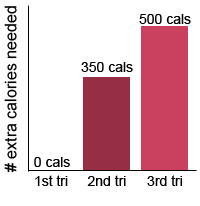 Check a BMI calculator and determine whether you are of normal weight or over or underweight. If you have started out your pregnancy at a normal weight, plan to gain between 25 and 35 pounds. If you are overweight, plan to gain about 15 pounds. If you were underweight, plan to gain between 28 and 40 pounds. The amount of extra food a pregnant person needs is not large. If you are of average weight and are moderately active, you need the same amount of calories in your first trimester as you did before you were pregnant. In your second trimester, you need 350 calories more a day; and in your third trimester, only 500 extra calories are needed per day. (Three hundred calories is the equivalent of three glasses of non-fat milk or a peanut butter sandwich.)
Two stories

Carrie
When Carrie discovered she was pregnant, she realized she needed to make some changes.

Lorinda
Lorinda found herself very stressed with her move to the new town.
How can I make myself more comfortable?
Follow the suggestions above on eating a balanced healthy diet, avoiding excessive weight gain, and exercising. These will help you stay healthy and able to cope with the increased demands that pregnancy places on your body and immune system. It is also important to practice stress reduction techniques on a regular basis.
Here are some suggestions for specific discomforts:
- Nausea. Try to eat small, frequent meals. Small bites of crackers, hard candy, sips of juice or soda may help. Consider acupressure bands (wristbands) or acupuncture.
- Back pain. Pay careful attention to your posture when standing, sitting, driving, or working. Don't stand with your weight on one foot and avoid crossing your legs when sitting. Avoid lifting more than 20 to 25 pounds (including older children!), and be especially careful when lifting: bend your knees, hold the object close to your body, and use the muscles in your legs to assist you in lifting. If you spend a lot of time standing, consider standing with one foot up on a three- or four-inch block, with your weight evenly balanced on both legs. Cold packs or hot packs may provide some relief, as may spending some time in a knee-chest position. Consider yoga or prenatal exercise classes, acupuncture, massage, physical therapy, or chiropractic care. Not all providers are used to caring for those who are pregnant; be sure to ask about this when making appointments, and ask for referrals if needed.
- Fatigue. Prioritize activities. Consider brief periods of rest or a nap during the day (but don't make this too long or you might have difficulty sleeping at night). Ask for help from others. You might find that meditation or exercise is rejuvenating. Consider complementary therapies, such as Reiki.
- Hemorrhoids or constipation. Make sure you are getting 10 to 12 glasses of water or other non-caffeinated liquid each day. Warm water especially helps stimulate the bowels. Your diet should include fresh fruits and vegetables and whole grains. Daily exercise also helps. Witch hazel compresses may be soothing for hemorrhoids.
- Edema (swelling). Rest with legs elevated periodically during the day. Consider massage, especially leg and foot massage.
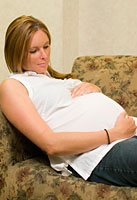
- Heartburn. Consider eating several small meals instead of three large ones. After eating, remain upright for about 45 minutes. You might identify some foods, such as foods high in fat, which make heartburn worse - pay attention to your body's message and avoid them!
- Mood swings. Make sure you are getting enough rest. Stress reduction practices, such as meditation or breathwork, might be helpful, as might complementary therapies, such as massage or Reiki. Of course, it is also helpful to talk about your concerns with your partner, another supportive friend or family member, or a mental health professional.
- Carpal tunnel. Carpal tunnel may cause tingling in your fingers or pain in your wrists and hands, and is caused by swelling tissue in your wrists putting pressure on the carpal nerve. You can do hand and finger massage yourself to increase blood flow to your hands and reduce the swelling. You can also elevate your arms above your head. Physical therapy and acupuncture have also been shown to be effective.
Additional Readings
Exercise:
Essential Exercises for the Childbearing Year, 4th ed. Elizabeth Noble. 2003.
Exercises to ease pregnancy aches and prepare you for childbirth. BabyCenter.
Nutrition:
Nutrition and Pegnancy: A Complete Guide from Preconception to Postdelivery. Judith E. Brown and Howard N. Jacobson. 1998.
Pregnancy Food Dos and Don'ts. U.S. Department of Health and Human Services.
Emotional Wellbeing:
The Woman's Comfort Book: A Self-Nurturing Guide for Restoring Balance in Your Life. Jennifer Louden. 2005.
Prenatal Care: