How Can I Choose the Best Mind-Body Therapy for Me?
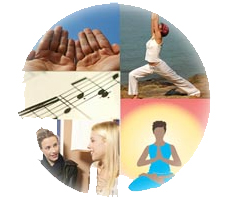 Choosing a mind-body therapy isn't easy, and doing some "homework" before making your choice can help you identify the practice that is best for you. Ask yourself:
- What do you want from the therapy? Do you want to address your stress so you can decrease your risk of disease? Do you need to find a way to cope with physical symptoms? Are you looking to treat a particular disease? Or are you looking to increase your general wellbeing? If you have a specific health goal, ask your provider which therapies he or she would recommend and do some research on your own-there is lots of information out there.
- What's appealing? Do you like to dance, sing, paint, exercise? Choosing a therapy you'll enjoy increases your chances of sustaining and reaping the benefits of a mind-body practice.
- What's logistically realistic at this point? How much free time do you really have to devote to this practice? Are there financial constraints? Is there an instructor or therapist in your community to help you get started? Your commitment to a particular practice may evolve over time, but it's important to base your initial choice on what's realistic for you now.
- What physical, intellectual, and/or spiritual characteristics must you consider? Can you settle down in a sitting position or do you prefer to move? Do you find that music or art brings you a peace you don't find elsewhere? Are you comfortable with a spiritual approach? Think about your characteristics and choose a mind-body therapy that incorporates them. Again, that is not to say that these characteristics don't change over time. But honor your present self as you begin your mind-body journey.
- What is safe and effective? Generally, mind-body therapies are very safe. Remember that mind-body therapies have a rich and ever-expanding body of research supporting their efficacy. In the end, however, you are responsible for ensuring your own safe and effective mind-body routine, so tailor it to your needs.
For example, if you're choosing a therapy with an intense physical component, seek approval from your healthcare provider and listen to your body to avoid overdoing it. If you are suffering from depression or a personality disorder, talk with your primary therapist before doing meditation, clinical hypnosis, or guided imagery (and some type of expressive therapies that use guided imagery). If you're using medication, monitor yourself to determine if your mind-body practice reduces your need.
How can I create a successful mind-body practice?
Beginning any new health regime, including a mind-body therapy program, requires you to change your habits, your schedule, and your mind. Here are six steps to starting on and sticking with a mind-body practice:
- Identify what you want to change.
- Set a clear and realistic goal.
- Recognize challenges you may face, so you can plan for them.
- Create specific, measurable action steps.
- Enlist support.
- Check your progress on your action steps as you move to your goal and make adjustments as necessary.
Three examples of mind-body practices
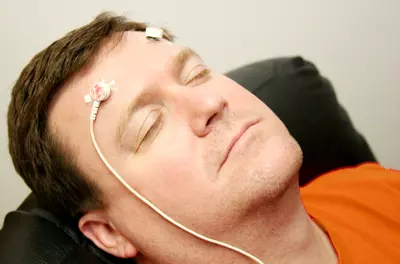
Biofeedback
Biofeedback trains patients to observe shifts in their bodily functions by using electronic monitors (i.e., heart rate, respiration, blood pressure, muscular tension, and brain activity). With this focus, patients learn to adapt and modify their mental and emotional responses to alleviate symptoms and regulate specific conditions.
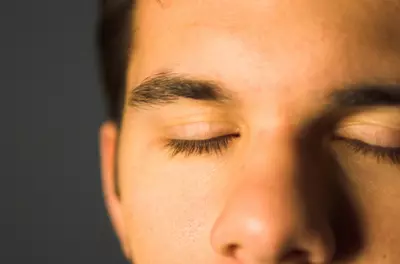
Imagery
Imagery exercises use creative imagination to "picture" scenarios that relax and heal. They can be done on your own, or with a facilitator guiding you, which is called guided imagery.
A common relaxation practice is to mentally picture yourself in a pleasant place that puts your mind and body at ease.
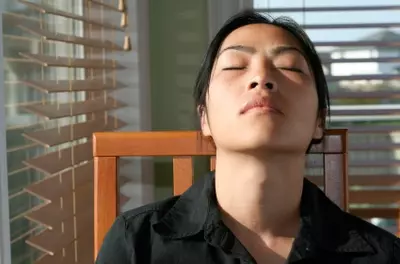
Breathwork
One way to master stress is to be aware of your breathing. When people feel panicked or unconsciously stressed, they tend to take short, shallow gasps of air. The resulting lack of oxygen restricts blood flow and causes muscles to tense. Full, deep breathing is an effective way to reduce tension, feel relaxed, and reduce stress.
What support or instruction will I need?
Mind-body therapies and practices differ in the amount of professional support necessary. Some, like breathing, just need basic initial instruction.
Others, such as biofeedback, guided imagery, and meditation, need more extensive initial training and then can be practiced on your own.
Still others, such as music therapy or clinical hypnosis, might need ongoing contact with a practitioner. In many cases a group or community of individuals engaged in a practice similar to yours can be invaluable for support and advice.
How can I find support?
Finding support and instruction can hugely impact your chance of success. When seeking professional guidance, keep these tips in mind:
- Talk with your primary healthcare provider(s) or someone you believe to be knowledgeable about your chosen mind-body therapy, and ask if they can recommend a trained professional to help you as you begin your program.
- Take these recommendations and gather information via phone. Ask basic questions about credentials and practice. Where did they receive their training? What licenses or certifications do they have? How much will the treatment, classes, or support cost?
- Check with your insurer to see if they will cover the cost of this particular mind-body therapy (and check your budget if not).
- After selecting a mind-body practitioner, teacher, or class, make a list of questions to ask at your first visit. Be prepared to answer questions about your health history, including injuries, surgeries, major illnesses, and any drugs you take.
- After a visit or two, decide if your practitioner, class, or instructor is right for you. Did you feel comfortable, and could you freely communicate? Does the mind-body therapy plan seem reasonable and acceptable to you?
Breathing Techniques
By taking deep breaths, you will allow more air into your body, slowing your heart rate and lowering your blood pressure. Explore these techniques.
Breathing Techniques
 When we are panicked or unconsciously stressed, we tend to take short,
shallow gasps of air. The resulting lack of oxygen restricts blood flow and
causes muscles to tense. By allowing more air to enter your body, you will
slow down your heart rate, lower your blood pressure, and break the stress
cycle. Explore the following breathing techniques.
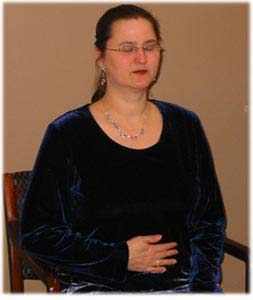
Breathing Deeply
Try imagining a spot just below your navel. Breathe into that spot and fill
your abdomen with air. Let the air fill you from the abdomen up, then let it
out, like deflating a balloon.
With every long, slow breath out, you will feel more relaxed.
The next time you are in a stressful situation:
- Sit up straight.
- Inhale through your nose with your mouth closed.
- Exhale through your mouth with your lips pursed (as if you were whistling or kissing).
- Make your exhalation twice as long as your inhalation (for example, inhale for two seconds, exhale for four). Use your abdomen when you breathe, consciously pushing your belly out. Try putting one hand over your stomach, to see how it rises and falls.
Straw Breathing
- Inhale normally and naturally.
- Exhale fully through a plastic drinking straw - make sure you have exhaled all of the air out of your lungs.
- Inhale normally (not through the straw).
- Exhale fully out of the straw.
- Repeat this exercise for 5 minutes.
- Ideally, do this twice a day.
Keep a pack of straws in your car and do this exercise whenever you're stuck in traffic.
2-Minute Relaxation
- Focus your attention on your breathing. Take a few deep breaths, exhaling slowly.
- Mentally scan your body. Notice areas that feel tense or cramped. Quietly loosen them. Let go of as much tension as you can.
- Rotate your head in a smooth, circular motion once or twice (avoid any movements that cause pain).
- Roll your shoulders forward and backward several times. Let all of your muscles completely relax.
- Recall a pleasant thought, event, or place.
- Take deep breaths and exhale slowly.
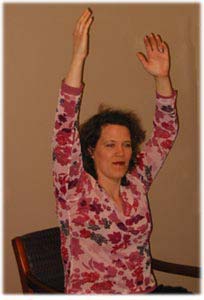 Exercise Your Shoulders and Neck Muscles
- Shrug your shoulders. Stand up or sit. Push your shoulders up around your ears and tighten the muscles as much as possible. Let them drop and relax. Repeat.
- Stretch up and overhead. While sitting in a chair, bring your arms overhead, holding them straight with fingertips pointing toward the ceiling. Elbows shouldn't be locked. Reach skyward with your right hand and then with your left hand. You should feel the stretch, but nothing should hurt. Breathe comfortably throughout.
- Swing your arms. Stand up. Let your arms stand loose at your sides. Lean forward slightly and swing your arms back and forth and from side to side across your chest. Relax. Stop swinging. Lift one arm up over your head, and look over your right shoulder. Hold that position. Relax and breathe deeply. Then try it with the other arm.
- Walk. Go out for a walk, but leave your pocketbook behind; if you carry a bag, you mightthrow your body off balance. Walk briskly and throw your shoulders back as you move. Don't race. Hurrying may make you slouch forward unconsciously, creating tension in the curve of your shoulders. Throw your shoulders back, expand your chest area, and breathe deeply.
Soliciting the Relaxation Response
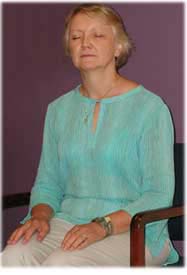 With a little practice, you can learn how to shift into a relaxation mode. You can start by practicing the following approach. Over time, you will develop an ability to shift into a more relaxed state in the midst of stressful situations.
The practice is simple:
- Choose a quiet place. Select a quiet place that is free of distractions. Create a soothing environment in your home or at work. Turn off the computer, radio, TV, stereo, and telephone.
- Find a comfortable body position. You can sit or recline on a chair or sofa, or sit comfortably on the floor. Make sure you feel supported.
- Silently repeat a word, sound, prayer, or focus on your breath.
- If you find yourself distracted, passively return to that stimulus without judgment or emotion.
You will find increasing benefits if you can commit to an uninterrupted length of time each day to do your practice. Relaxing for 20 minutes once or twice a day is optimal. You might start with just five minutes and build from there.
Other Methods
People use many techniques to relax and feel more positive emotions. Some folks find prayer is
an essential part of their well-being. Some like to reflect on what brought them joy in the day
and give thanks. Gratitude is one well-recognized method of creating a positive emotional state
and the attending benefits.
Find a method that works for you and give it some priority in your life. You will reap the benefits of increased health and well-being!

Immerse yourself in a lush, green forest with this 5-minute video. Listen to the audio for some guided imagery.